MOSFET Replacement Selection: Look Beyond Voltage and Current
Compare replacement MOSFET candidates using full part identity, gate drive, switching behaviour and engineering approval.
Published 3 November 2026 · Mosvanta editorial · Updated 4 November 2026
Approve a replacement MOSFET by matching the exact package and pinout, checking electrical limits under the intended drive conditions, and reviewing switching and thermal behaviour in the application. Treat similar catalogue ratings as a starting point. For used devices, add a separate lot-condition review before approving the order.
Decision checklist
| Check | Evidence to request | Reason to pause approval |
|---|---|---|
| Identity | Full MPN, package drawing and pinout | Same-looking package assumed interchangeable |
| Drive | Guaranteed resistance at available gate voltage | Threshold used as the fully-on drive voltage |
| Application | Switching, thermal and SOA review | Higher advertised current treated as a guarantee |
Start with the exact device
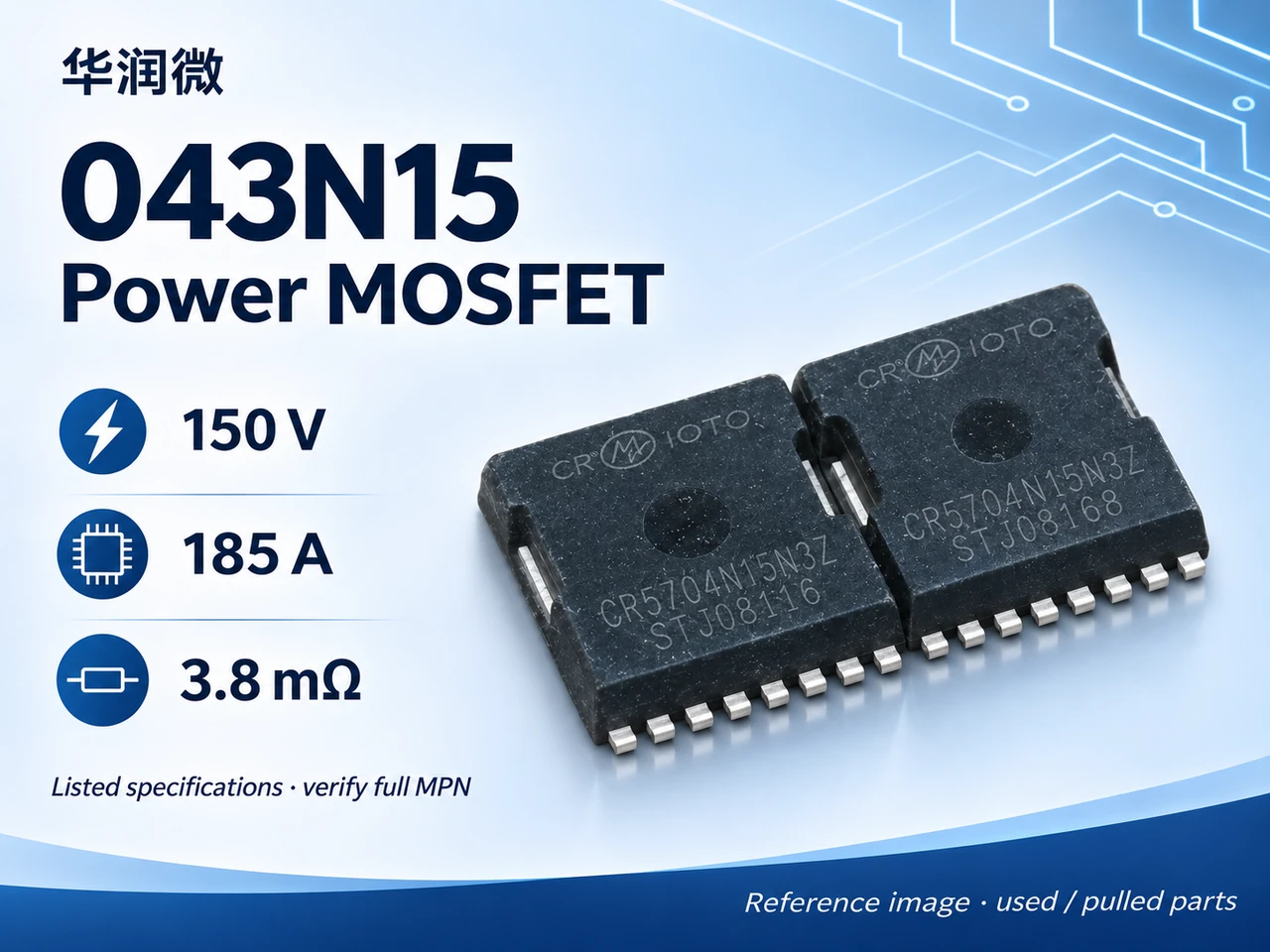
A replacement search starts with the full manufacturer part number and its datasheet, not a short top marking alone. Record the package, pin assignment and circuit function. A visually similar package can contain a different device, and a catalogue entry is not evidence that a particular batch is suitable for your board.
Build a comparison that engineering can review
Compare drain-source voltage limits, gate-source limits, on-resistance at the available gate drive, charge characteristics, thermal conditions and the relevant operating envelope. Separate guaranteed limits from typical curves. Do not approve a substitute just because its headline voltage or current is equal to or greater than the original.
Check the drive circuit and switching conditions
A candidate with a different gate charge can place different demands on the driver and change switching behaviour. Review the driver, frequency and circuit conditions together. Gate threshold describes a specified low-current measurement; it is not the gate drive that guarantees low on-resistance in the intended power circuit.
Keep condition approval separate
When sourcing pulled components, electrical compatibility and batch condition are separate approval questions. Ask for identified lot photographs and recorded inspection results. An acceptable part number does not establish the condition of a used device. Conversely, a visually clean device does not establish that it is a suitable replacement.
Approve samples before a bulk decision
Record the proposed MPN, manufacturer datasheet, differences from the original, test conditions and engineering decision. Validate the candidate in the actual design under its required operating conditions. Treat a vendor suggestion as a candidate for review rather than a drop-in guarantee. Preserve the approved sample and lot reference for purchasing.
Source and next steps
Toshiba: MOSFET charge characteristics. General selection guidance; confirm exact values in the manufacturer datasheet.
Browse our MOSFET directory and prepare your request with the RFQ checklist. Product workbook entries are sourcing references, not independent performance certification.
What should stop an order?
Pause approval when the full part identity, agreed condition or evidence needed for your decision is unresolved. Ask the supplier to clarify the specific gap. Keep the response with the order record so that a later buyer can see what was actually approved.