MOSFET Current Ratings: Why the Headline Number Is Not Enough
Read MOSFET current ratings with their thermal and package conditions before comparing bulk offers or approving replacement parts.
Published 5 November 2026 · Mosvanta editorial
What does the current rating mean?
A MOSFET current rating is a limit under stated conditions, not a promise that every assembled circuit can carry that current. Read the associated temperature, package limits and operating assumptions. For purchasing, keep the exact datasheet with the quoted part number so engineering can assess the device in the intended assembly.
Read the temperature condition beside the number
A headline current figure can assume a controlled case temperature that your board does not maintain. Find the conditions and relevant thermal information in the manufacturer documentation. Compare candidates under the same assumptions rather than choosing the largest advertised current. Missing conditions should remain an open question in the quotation record.
Separate device limits from assembly limits
The package and heat-removal path can restrict usable current. PCB copper, mounting and cooling belong in the engineering assessment. A package that fits the footprint does not necessarily provide the same thermal behaviour. Review the package and thermal checklist before approving a replacement.
Why a pulse figure is not a continuous-current promise
Check whether the quoted figure is continuous or pulsed. Read the pulse conditions and the device safe operating area before drawing conclusions. Do not carry a short-duration rating into a sustained-load requirement. Our SOA buying guide explains which conditions to retain.
What should a buyer ask for?
Request the complete MPN, manufacturer datasheet and the conditions behind any highlighted rating. If an alternative is proposed, ask engineering to review it against the original requirements. For a pulled lot, request condition and inspection evidence separately: a design rating does not measure the condition or remaining life of the offered units.
A useful approval record
Record the operating requirement, exact candidate, document revision and engineering decision. Preserve unresolved limits instead of replacing them with catalogue guesses. Compare the quotation with the approved record at receipt. A different lot or substituted part may require a fresh review even when the supplier repeats the same headline current.
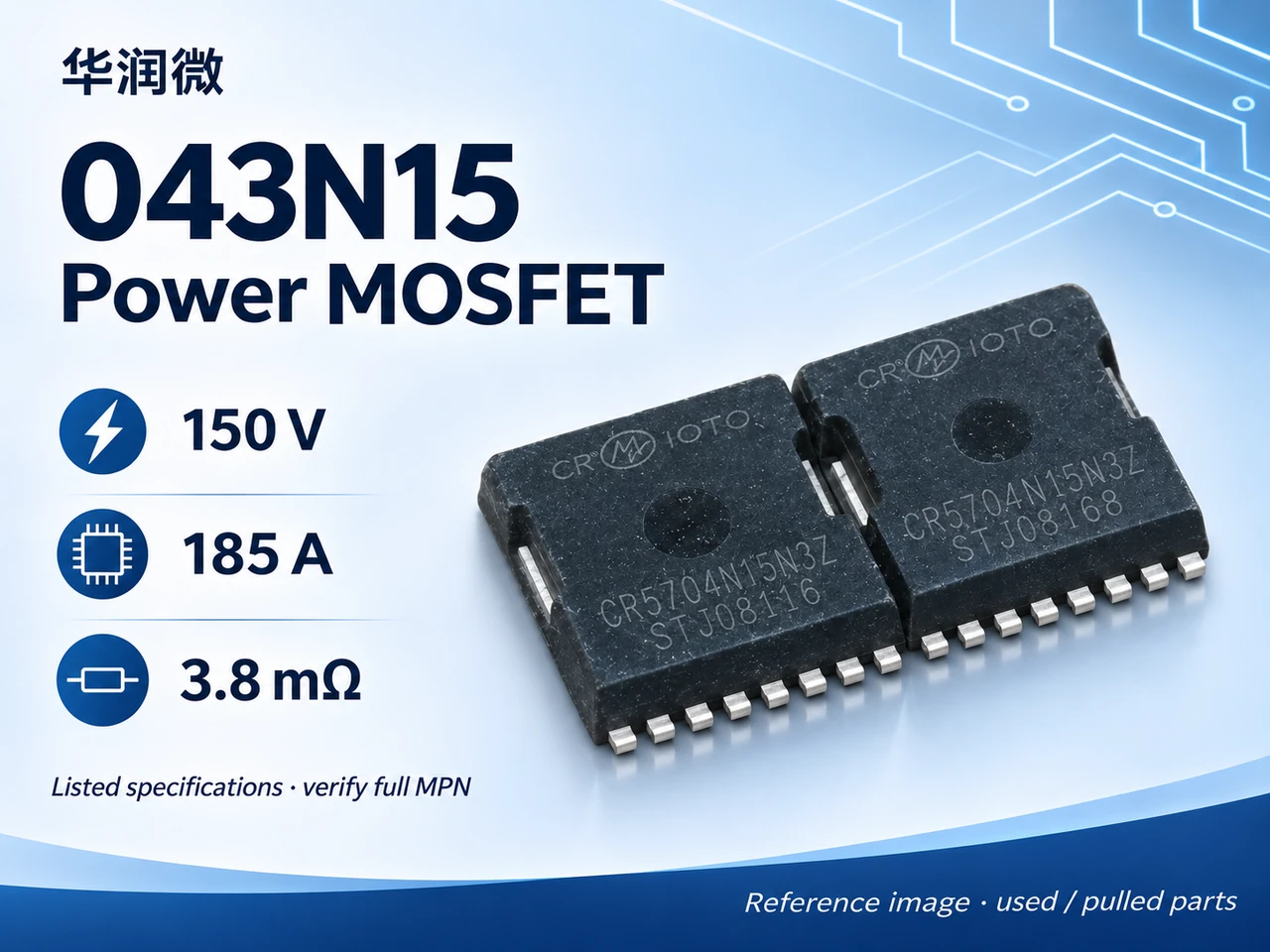
Prepare your enquiry
See the 043N15 catalogue reference and use the MOSFET RFQ checklist to document your requirements. The image is a product reference, not evidence for the application discussed.
Further reading: Toshiba: maximum ratings.