Blog / Buying guides
Pulled vs Unused Surplus MOSFETs: What Buyers Should Verify
Compare pulled and unused surplus MOSFET sourcing by condition, traceability, batch consistency and approval evidence.
Published 1 November 2026 · Mosvanta editorial · Updated 4 November 2026
Pulled MOSFETs were mounted and removed from equipment; unused surplus is offered as unused stock outside its original planned demand. Neither description proves authenticity or fitness for your design. Compare the available history, visible condition, traceability and lot evidence, then approve the batch against your actual purchasing requirements.
Decision checklist
| Check | Evidence to request | Reason to pause approval |
|---|---|---|
| Pulled parts | Ask about removal, cleaning and lead processing | Clean appearance treated as proof of unused condition |
| Unused surplus | Request labels, storage history and traceability | Unused treated as authorised-channel evidence |
| Mixed lots | Separate markings, date codes and condition groups | One sample used to describe unrelated stock |
Pulled MOSFETs have previously been mounted and removed from equipment. Unused surplus describes stock offered as unused outside its original planned demand. These descriptions concern history and condition; neither label by itself proves authenticity, electrical performance or suitability for a new application.
Separate history from identity
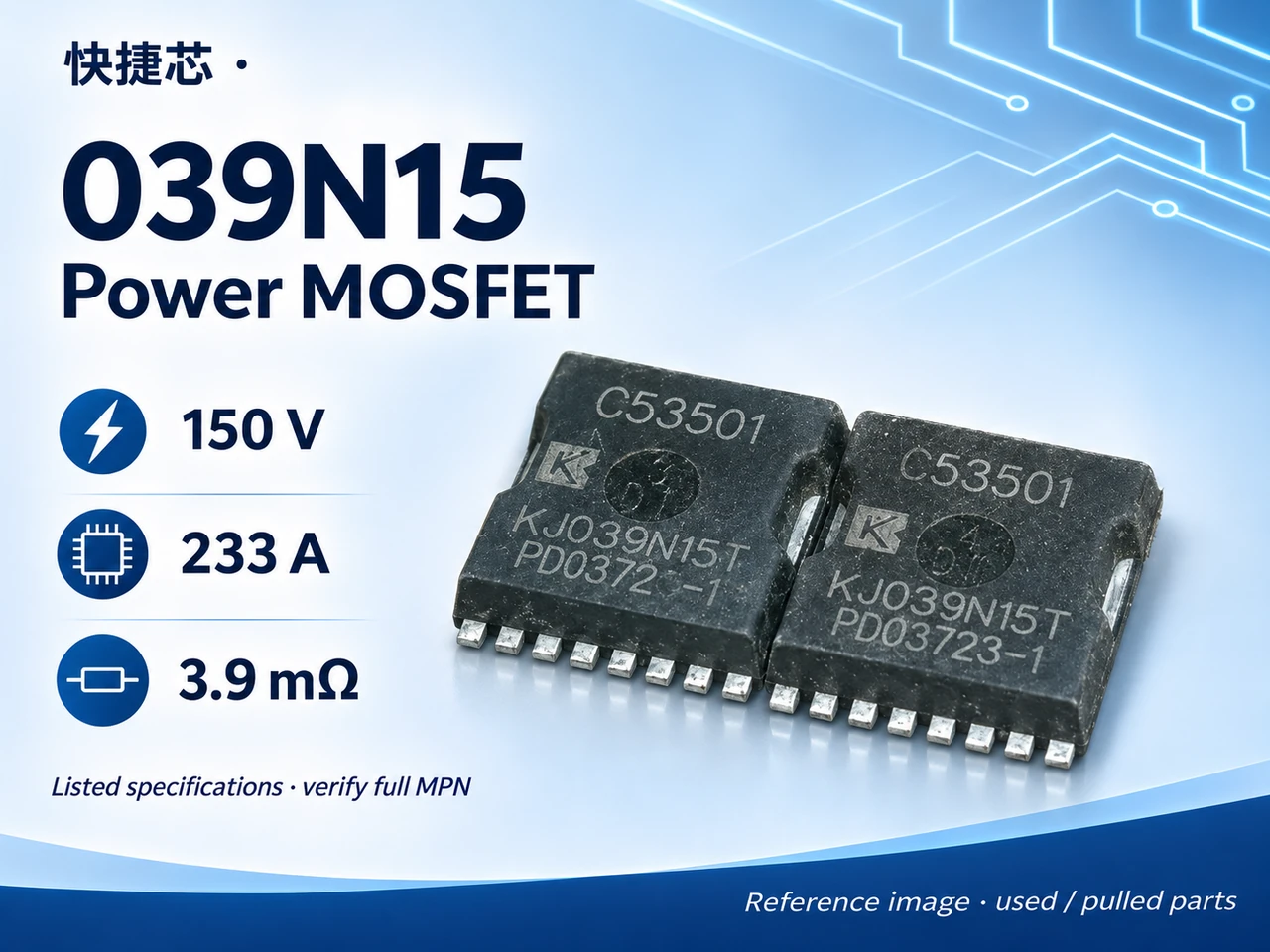
A recognisable manufacturer marking is useful identification information, but a photograph cannot establish the full supply history. Ask separately who made the device, what evidence supports that identity, whether it was previously mounted and how the seller obtained the lot. An original manufacturer device can still be used, damaged or unsuitable for your design.
What to inspect on pulled parts
Ask for close photographs of lead surfaces, solder residue, trimmed leads, package chips, mounting areas and markings. Ask whether parts were cleaned, straightened or otherwise processed after removal. A neat appearance is not a record of the removal process, storage conditions or previous electrical and thermal exposure.
Request that lots with different visible conditions be kept separate. If a shipment contains mixed date codes or markings, document that fact and decide whether engineering approval or separate inspection groups are required.
What to ask about unused surplus
Request available original labels, packing photographs and traceability documents. Check that the documents relate to the exact offered stock. Unused does not automatically mean recently manufactured, correctly stored or supplied through an authorised distribution channel. Ask about storage and any repacking, and distinguish documented facts from the seller’s description.
Compare offers using evidence
Use the same evidence request for every quotation: full MPN, actual lot images, condition statement, quantity, packing, traceability available, inspection records and agreed rejection terms. Avoid choosing solely on appearance or a headline current rating. Start with a sample lot when the source or condition is new to your team.
Does a passing sample qualify the entire lot?
No. Sampling describes only the inspected subset under its recorded conditions. It can support a purchasing decision, but it cannot establish that every device has identical history or performance. Agree on the sampling method and the action to take if a failure appears before treating the sample result as an acceptance decision.
Choose by the application and approval process
Compare the savings against the cost of inspection, sorting, rework and possible field failures. Where a customer or design requires an authorised supply chain or documented qualification, ask whether the offered lot meets that requirement before pursuing a price comparison. Use our condition guide and RFQ checklist to document the questions consistently.
Related reading
What should stop an order?
Pause approval when the full part identity, agreed condition or evidence needed for your decision is unresolved. Ask the supplier to clarify the specific gap. Keep the response with the order record so that a later buyer can see what was actually approved.