MOSFET Typical vs Maximum Values: A Datasheet Buying Guide
Separate typical curves, guaranteed limits and test conditions when comparing MOSFET quotations and inspection records.
Published 5 November 2026 · Mosvanta editorial
Typical and maximum values answer different questions
A typical MOSFET value describes representative behaviour under its stated conditions; it should not be treated as a guaranteed limit for every unit. A specified maximum also applies only with the associated conditions and document definitions. Read both before translating a product listing into an acceptance requirement.
Start with the electrical-characteristics table
Find the parameter, minimum or maximum where specified, and the measurement conditions beside it. Keep gate voltage, test current and temperature attached to on-resistance figures. A value copied without these conditions can make two offers appear directly comparable when they are not. Do not turn an empty table cell into a zero or an implied guarantee.
Use curves for their documented purpose
Check whether a graph is typical and which conditions it represents. Ask engineering how it supports the design decision, rather than lifting a convenient point from the graph as a purchasing limit. A curve and a guaranteed table specification are not interchangeable sources of acceptance criteria.
Avoid the lowest-milliohm shortcut
A smaller resistance claim may use a different gate voltage, temperature or device version. First establish a like-for-like comparison. Then review the driver and circuit requirements. See our gate-drive buying guide for why threshold voltage alone cannot settle that question.
Keep supplier measurements traceable
For an inspected used lot, ask for the measurement method and conditions as well as the results. A seller’s reading does not automatically reproduce the datasheet method. Agree which limits apply to the order and how discrepancies will be reviewed. Our incoming inspection workflow provides the record structure.
Write the decision in the RFQ
State the complete approved MPN and whether alternatives are permitted. Link the manufacturer document used for review and mark any unverified listing values for confirmation. Do not claim a batch meets a guaranteed specification merely because one sample is close to a typical value. Keep sample results and the lot acceptance decision distinct.
Prepare your enquiry
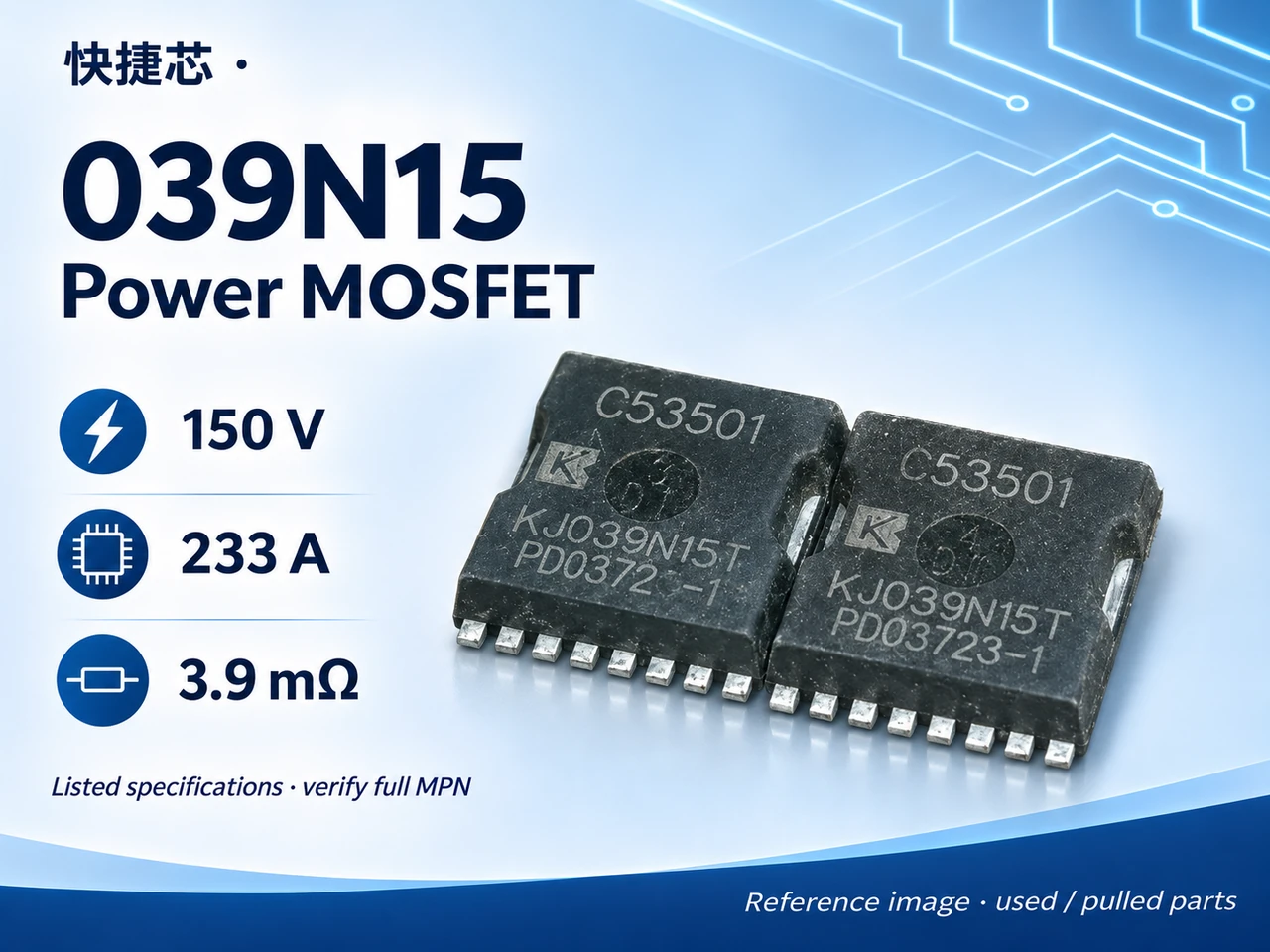
See the 039N15 catalogue reference and use the MOSFET RFQ checklist to document your requirements. The image is a product reference, not evidence for the application discussed.
Further reading: Infineon: OptiMOS datasheet explanation.